
///
Monday, October 12, 2026
Discover essential pattern making tools, including French curves, L-shapers, rulers and tracing wheels, to improve drafting accuracy and garment construction.
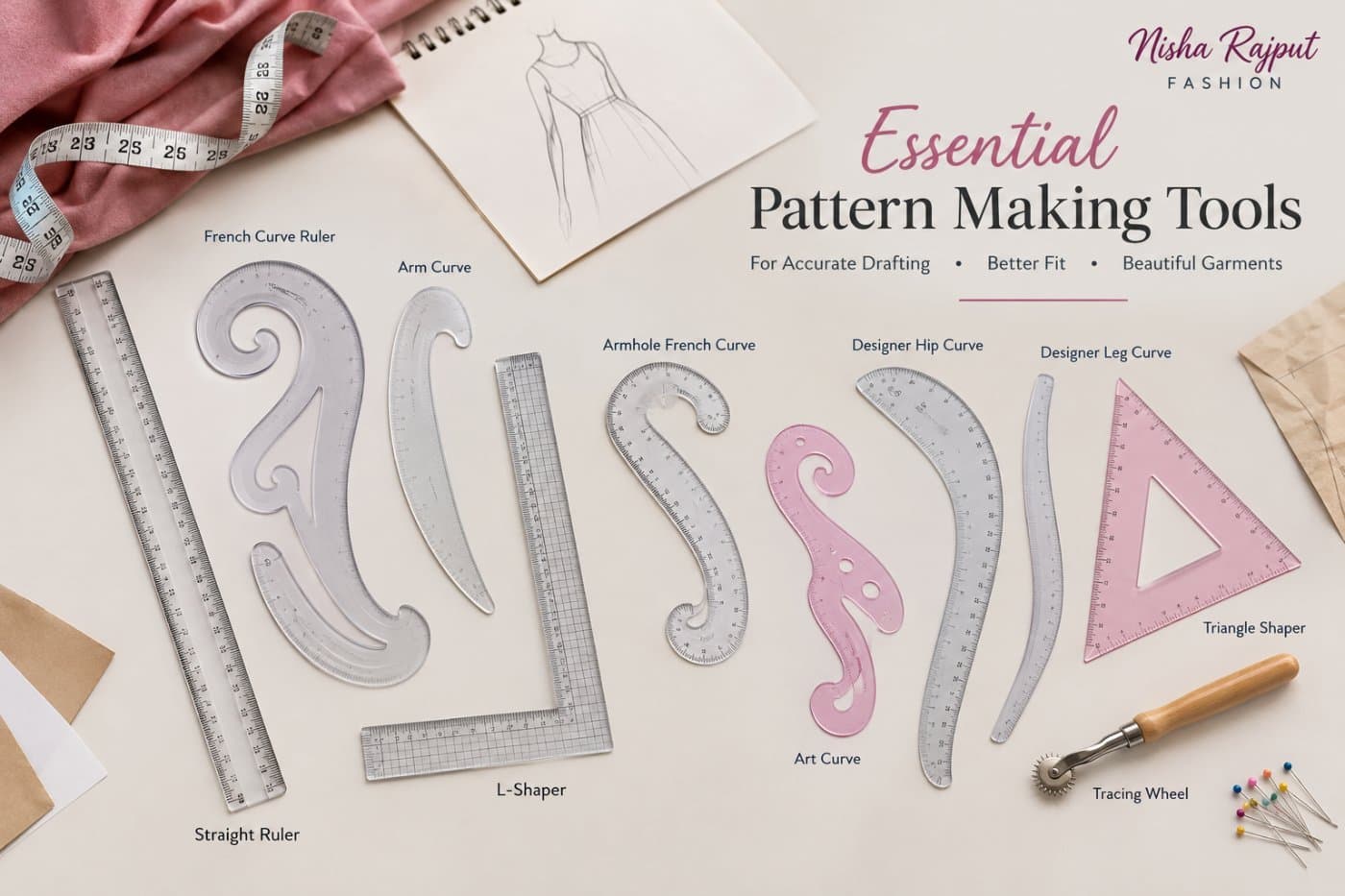
Pattern making is an important step in turning a design idea into a wearable garment. From drafting a blouse to creating patterns for dresses, kurtis and trousers, accurate measurements and clean lines help improve fit and finishing. The right pattern making tools make the process easier for beginners, fashion design students, tailors and boutique owners.
In this guide, discover essential drafting tools and how each one supports garment construction.
A straight ruler helps you draw accurate lines when drafting patterns. It is useful for marking garment lengths, drawing straight seams and connecting measurement points. Keep one nearby when creating basic blocks or adjusting existing patterns.
A French curve ruler helps create smooth curves that are difficult to draw by hand. It is useful for shaping necklines, armholes and other curved sections. Choose a curve that suits the area you are drafting, and trace lightly before finalising the line.
An arm curve helps create a smooth armhole shape during drafting. Since armhole shape affects sleeve fitting and movement, careful drafting is essential. Use it alongside accurate body measurements and check that the front and back pattern pieces suit the design.
An L-shaper helps draw right angles and check horizontal and vertical lines. It is useful for marking garment lengths, establishing square corners and keeping pattern lines aligned. This makes it a practical tool for drafting basic garment blocks accurately.
An armhole French curve helps shape armholes and related curved lines consistently. It is particularly useful when developing or adjusting fitted garments. Always compare the curve with your measurements and design requirements instead of relying on the tool alone.
An art curve helps draw flowing, customised lines for different designs. Fashion designers can use it to refine style lines or adjust curved sections. It offers flexibility when a standard ruler does not match the shape required.
A designer hip curve helps draft smooth shaping around the hip area. It is useful for skirts, trousers, kurtis and other garments where side seams require gradual curves. Check the shape against body measurements to maintain the intended fit.
A designer leg curve supports drafting and refining curved lines around trouser legs and other lower-body sections. It allows smoother adjustments than drawing freehand. The ideal shape depends on the garment style, desired fit and ease.
A triangle shaper helps draw angled lines and maintain consistent angles while drafting. It supports tasks such as marking design details, checking alignment and creating straight sections at specific angles. It is a helpful addition to a drafting kit.
A tracing wheel helps transfer pattern markings using a suitable tracing method. It can be useful for transferring darts, seam details and construction marks. Follow the instructions for your tracing paper or fabric, and test the method first to prevent unwanted marks.
Start with tools that match the garments you make most often. Beginners can build a basic kit with a straight ruler, L-shaper, suitable curves, measuring tape and tracing wheel. Add specialised tools as your projects become more advanced.
Look for tools that are easy to read, comfortable to handle and suitable for repeated use. Store them flat and keep their edges clean to maintain accuracy. Remember that tools support good technique; they cannot replace correct measurements, careful checking and regular practice.
Having the right tools can make drafting more organised and consistent. Explore the pattern making tools available at Nisha Rajput Fashion, including rulers, curves and tracing tools, and choose the items that match your sewing and design needs.
Whether you are learning garment pattern making or improving your boutique workflow, start with the essentials and build your kit as your skills grow.