///
Monday, October 12, 2026
Learn how to use a seam gauge for accurate hems, seam allowances, button spacing, and precise stitching with these simple sewing tips.
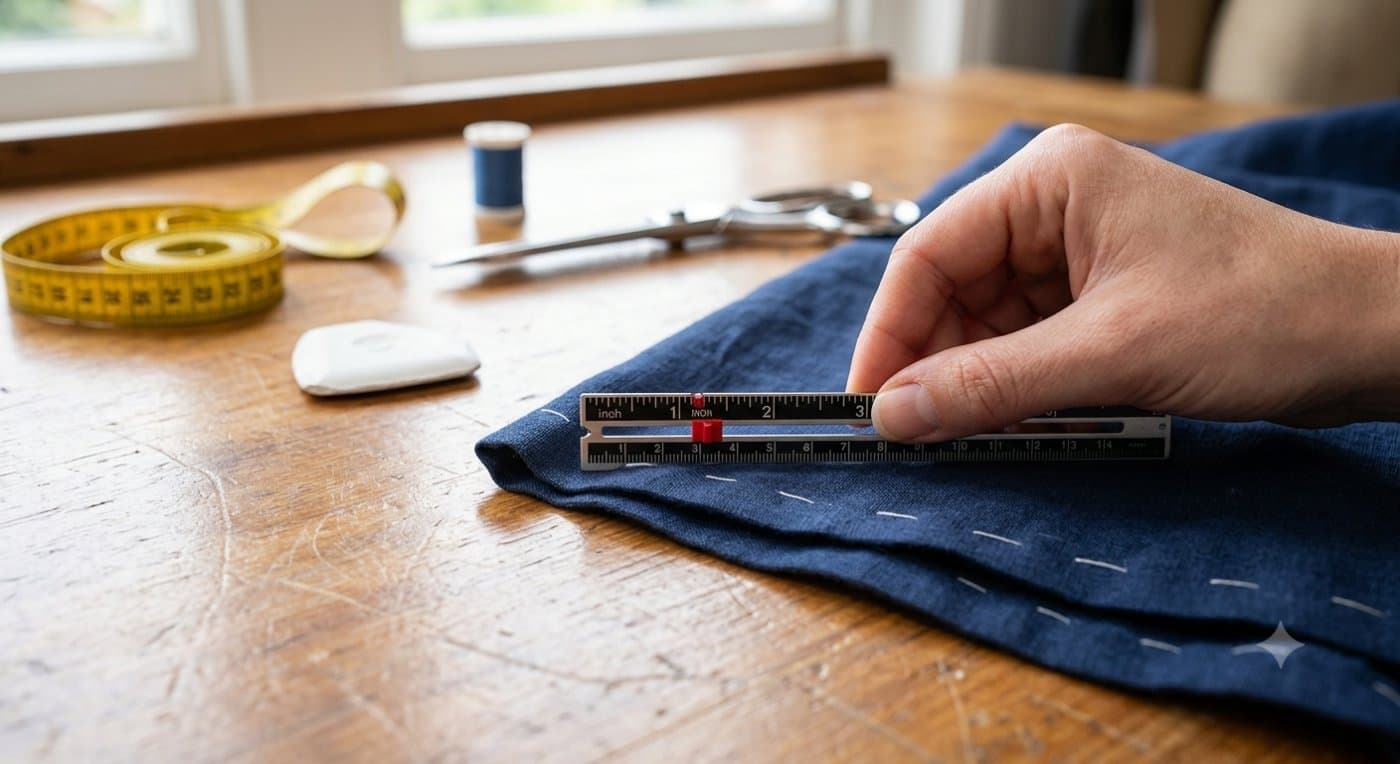
A seam gauge is a small but essential sewing tool that helps achieve accurate measurements while stitching garments. Whether you are a beginner learning sewing or an experienced tailor creating professional outfits, a seam gauge can help you maintain consistent measurements and improve the overall quality of your work.
From measuring seam allowances to creating perfect hems and evenly spaced buttonholes, this simple tool makes many stitching tasks easier and more precise.
A seam gauge is a small ruler, usually made of metal or plastic, with measurement markings and a movable slider. It is designed to measure short distances accurately while sewing.
Unlike a measuring tape, which is useful for taking body measurements and measuring longer fabric sections, a seam gauge is ideal for small, detailed measurements.
It is commonly used for hemming, seam allowances, pleats, button placement, and other garment construction tasks.
Accurate measurements play an important role in creating well-fitted and professionally finished garments. Even a small measurement error can affect the appearance of a garment.
Here are some important benefits of using a seam gauge:
Using a seam gauge is simple once you understand its basic functions. Follow these steps to measure fabric accurately.
Before using the tool, check its measurement markings. Most seam gauges include centimetre or inch markings, depending on the design.
Identify the zero mark and locate the movable slider. The slider helps you maintain a fixed measurement while marking or folding fabric.
Seam allowance is the distance between the fabric edge and the stitching line.
Place the seam gauge against the fabric edge and measure the required distance. Mark the stitching line using a suitable fabric marking tool.
Repeat the process along the fabric edge to maintain a consistent seam allowance.
A seam gauge is particularly useful when folding hems on kurtis, trousers, sleeves, skirts, and other garments.
Measure the desired hem width using the gauge. Fold the fabric to the measured distance and press it with an iron if the fabric allows.
Check the measurement at several points before stitching to ensure the hem remains even.
Evenly spaced buttons improve the appearance and functionality of a garment.
Use the seam gauge to measure the distance between button positions. Mark each position carefully with tailor's chalk or a suitable fabric marker.
This technique is helpful when stitching shirts, kurtis, blouses, and other buttoned garments.
Pleats require consistent measurements to create a balanced appearance. Use the seam gauge to measure the width and spacing of each pleat before folding the fabric.
You can also use it to check narrow folds, small tucks, and other garment details that require precision.
Even a useful sewing tool can produce inaccurate results when used incorrectly. Avoid these common mistakes:
Taking a few extra moments to verify your measurements can help prevent fabric wastage and improve garment finishing.
Both tools are useful for sewing, but they serve different purposes.
A seam gauge is best for short, precise measurements, such as hems, seam allowances, and button spacing. A measuring tape is better for taking body measurements, measuring garment lengths, and working with larger fabric sections.
For the best results, keep both tools in your sewing kit so you can handle different measurement tasks efficiently.
For accurate stitching and professional garment construction, consider keeping these tools in your sewing workspace:
Using the right tools together can make stitching more convenient and help you achieve better results.
A seam gauge may be a small sewing accessory, but it plays an important role in accurate garment construction. From measuring hems and seam allowances to marking button positions and pleats, this tool helps maintain consistency throughout the stitching process.
Whether you are stitching clothes at home, learning fashion designing, or managing a boutique, adding a seam gauge to your sewing toolkit can make everyday stitching tasks easier.
Explore the essential sewing tools available at Nisha Rajput Fashion and find the right accessories to support your stitching and garment-making needs.