Types of Measuring Tapes Used in Fashion Designing
Monday, October 12, 2026
Discover the different types of measuring tapes used in fashion design and sewing. Learn which tape measure is best for body measurements, flat drafting, and tailoring.
Types of Measuring Tapes Used in Fashion Designing
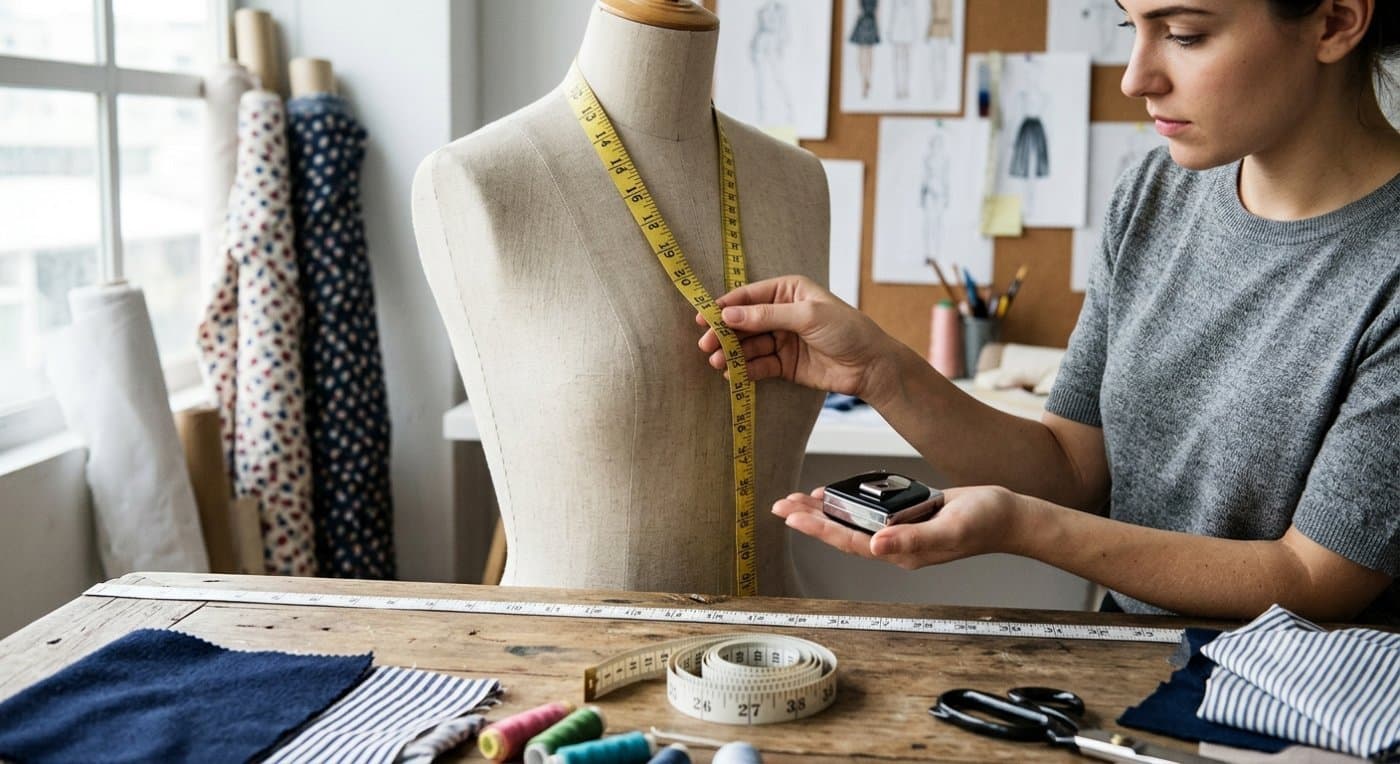
In fashion design and garment construction, accuracy starts long before a single cut is made into the fabric. The humble measuring tape is arguably the most frequently used tool in any studio or atelier. However, not all measuring tapes are built the same way. Using the wrong type can distort body measurements or lead to ill-fitting garments.
Here is a guide to the different types of measuring tapes used in fashion designing, their unique features, and how to choose the right one for your sewing projects.
1. Flexible Fiberglass Measuring Tapes
This is the standard, staple tool found in every tailor's kit and fashion design studio.
- Material: Woven fiberglass coated with vinyl or plastic.
- Key Feature: High flexibility with zero stretch.
- Best Used For: Taking body measurements across rounded curves (bust, waist, hips) and checking curved seamlines.
- Why It Works: Unlike cheaper plastic tapes, fiberglass does not stretch out over time, ensuring your 34-inch measurement remains accurate even after years of use.
2. Flexible Vinyl / Soft Plastic Tapes
A budget-friendly alternative often included in beginner sewing kits.
- Material: Lightweight PVC or vinyl.
- Key Feature: Extremely soft and pliable.
- Best Used For: Simple home craft projects and light garment fitting.
- Drawback: Over time and under tension, soft vinyl can stretch slightly, leading to small measurement inaccuracies in professional dressmaking.
3. Retractable Pocket Measuring Tapes
Designed for convenience and portability, these feature a soft fabric or vinyl tape housed inside a compact plastic casing with a push-button retraction mechanism.
- Material: Thin vinyl or soft fabric inside a hard plastic or leather case.
- Key Feature: Compact and neat; prevents tangling in your tool bag.
- Best Used For: On-the-go fittings, shopping for fabrics, and quick client consultations.
- Note: Ensure the pull-tab at the zero end is sturdily attached so it doesn't lose accuracy at the starting point.
4. Double-Sided (Imperial & Metric) Tapes
Most modern sewing tapes come with dual markings to accommodate different pattern drafting standards.
- Features: Inches (broken down into 1/8ths or 1/16ths) on one side and Centimeters/Millimeters on the reverse side.
- Pro-Tip: Look for tapes where the zero point starts on the same edge on both sides. Tapes that start "60 inches" at the same end as "0 cm" can cause confusion during quick measurements.
5. Adhesive / Sticky Measuring Tapes
These are specialized measuring strips designed to stick directly onto your workspace.
- Material: Paper, vinyl, or thin metallic tape with an adhesive backing.
- Best Used For: Sticking onto cutting tables, sewing machine beds, or workbench edges.
- Benefit: Allows you to measure ribbon, elastic, trim, or fabric cuts quickly without holding a loose tape.
Summary Comparison Chart
- Fiberglass Tape: Best for Professional Tailoring & Body Measurements. High durability and no stretch.
- Retractable Tape: Best for Travel, Fabric Shopping & Quick Consultations. Portable and clutter-free.
- Adhesive Tape: Best for Cutting Tables & Repeat Measurements. Stationary hands-free convenience.
How to Care for Your Measuring Tapes
- Avoid Heat: Never press a hot iron directly onto a vinyl or fiberglass tape, as high heat will melt or warp the synthetic fibers.
- Store Flat or Rolled: Roll your tape loosely or hang it over a hook. Folding it sharply creates permanent kinks that spoil accurate flat lay measurements.
- Check for Wear: Periodically check your tape against a rigid metal ruler to ensure it hasn't stretched over time.